• Home
  • Portfolio
  • E-Newsletter
  • Videos
  • Write For Us
  • Contact Us

Stock Market Opens

  • Info
  • Tips
  • Advice
  • Stocks
  • News
  • ROI

5 Types Of Industrial Manufacturing Stocks To Buy

August 25, 2026 by Stock Market Opens Trading Tactics Team

top industrial manufacturing stocks buy now best manufacturers investor roi

There are plenty of profitable industrial manufacturing stocks to buy now for your investment portfolio. The manufacturing sector is made up of businesses that produce equipment, machinery, some robotics, and consumer goods. Many of the largest industrial companies are closely intertwined with the nation’s economy. Therefore, these manufacturer stocks are a great asset to include in every investors’ portfolio. As an experienced stock trader, these top opportunities help you take advantage of the growing economy, stay ahead of inflation, and diversify your holdings. In fact, adding these investments to your portfolio is key to reduce volatility and leverage valuable tax advantages. To help you get started, read on to learn about the top industrial manufacturing stocks to buy now.

Space And Aerospace Manufacturing

Many experienced traders are making investments in the rapidly-growing, highly-lucrative space and aerospace manufacturing industry. Companies in this sector engineer systems used in radars, airplanes, satellites, and space travel vehicles. Some of the most popular products include radio frequency enabled devices, embedded processing solutions, and dependable computer servers. In addition, many reputable agencies specialize in computers for avionics. You may even find profitable aerospace investments that revolve around military defense electronics. Investing in these funds, you can access profitable assets with a potentially higher-than-average return on investment (ROI). Of course, this is key to minimize risk and expand your profit potential. Certainly, consider purchasing the top industrial aerospace manufacturing stocks now.

Infrastructure Project Development

In addition, explore opportunities in the industrial infrastructure product design and development market. Enterprise businesses in this field engineer advanced robotics and industrial automation solutions. Simultaneously, they focus on building electrical grids, sources of power, and AI-driven construction techniques. Of course, these businesses play a major role in revolutionizing the construction, manufacturing, and engineering industry. Simultaneously, they are a major player for investors looking to add environmental, social, and corporate governance (ESG) funds to their portfolio. Of course, this is a viable way to filter your investments to sustainable, ethical, and solid businesses. If you are interested in these opportunities, be sure to check out some great stock trading tips to help you get started. Indeed, there are a broad spectrum of high-paying investment opportunities in the infrastructure project development sector.

Injection Molding

Next, pursue industrial investments in an underrated sub-sector of manufacturing called injection molding. Innovative foam injection molding manufacturers specialize in closed-cell engineering for a wide range of products, such as medical devices, sporting goods, and protective gear. In fact, some of North America’s leading manufacturing companies, such as Foam Creations, have developed hundreds of additional consumer goods, such as animal toys, shower mats, and design chairs. These forward-thinking companies are able to manufacturer top-quality products with improved strength, better stiffness, and superior impact resistance. Therefore, they are a vital asset to include in every investor’s portfolio. Certainly foam injection molding manufacturing is a great industrial stock to purchase this year.

Homebuilding Manufacturers

With new affordable housing demand still high, there has never been a better time to invest in homebuilding manufacturers entering this new volatile economy. These businesses supply fundamental goods like lumber, drywall, and roofing products. Similarly, many companies offer consumers floor trusses, vinyl windows, as well as indoor furnishing products. Investing in this lucrative sector, you can build wealth, diversify your portfolio, and obtain real estate leverage. Naturally, this helps to hedge inflation risk and maximize your cash flow. Whenever the housing market is growing, you can be sure that your holdings are rapidly expanding as well. Surely, purchasing stocks in homebuilding manufacturers is an excellent strategic move on stock market investment.

Internet Of Things (IoT) Manufacturing

Of course, many profitable manufacturing investments exist in the rapidly emerging tech marketing sector including AI. Artificial intelligence manufacturers engineer advanced picks and shovels products for datacenters, cybersecurity, robotics, and aerospace technology. Simultaneously, they construct custom solutions for many other areas of the industrial sector, such as autonomous vehicles, virtual (VR), augmented (AR), and mixed reality (MR). Investing in these funds, you can drive efficiency, productivity, and risk reduction across your portfolio. This way, you can earn profits off of the next revolution of production. Naturally, this is essential to keep your portfolio growing. Absolutely investing in AI industrial stocks is a great industrial investment to purchase now.

Smart Stock Shares

There are several top industrial manufacturing stocks to invest in this year. First off, purchase stocks related to aerospace and defense manufacturing. In addition, look for rapidly growing investments in the homebuilding market. Next, explore profitable investments in industrial infrastructure project design and development. Certainly, look into investments in foam injection molding. Of course, there are plenty of additional opportunities in IoT manufacturing. Follow the points highlighted above to learn about the top industrial manufacturing stocks to buy now.

Filed Under: Advice, Featured, Info, News, ROI, Stock Trading Q & A, Stocks, Tips

5 Interesting International Stocks And ADRs To Buy

January 30, 2026 by Stock Market Opens Trading Tactics Team

top international stocks to buy best global stock picks

Whether you are looking to create new avenues to seize opportunities or simply wish to diversify your portfolio, international stocks can be a great component of your general investment portfolio. That is why more and more investors now allocate a percentage of their portfolio to stocks in international markets outside of the United States with ADR holdings. With that in mind, we have compiled a list of the top 5 interesting stocks from Europe and Asia that have been drawing attention in the past few months. All that is left for you to do is choose the most suitable stock picks for your portfolio.

1. JD.com

China’s online retail market seems ready for substantial long-term growth, accounting for about half of the world’s whole e-commerce spending. Trailing only Alibaba, JD.com is the second- largest online retailer in this Asian country. Focusing on high-quality products as well as unmatched fulfillment infrastructure, the business has found its way to differentiate itself from the comptetition.

2. HDFC Bank

According to expert analysts from Dividend Vision, HDFC Bank is the largest private sector lender in India. The bank is in a favorable position to take the advantage of the country’s economy which continues to develop quickly. It has over 5,700 branches in more than 2,900 towns and cities of India. HDFC is also taking part in the digital payments market which is sweeping India, as well as the rest of the world, these days.

3. ASML Holding

ASML Holding is based in the Netherlands. It is a company that manufactures and develops photolithography systems used by computer chipmakers for etchings mass-production on silicon. ASML Holding is the only company that produces ultraviolet lithography machines, supplied to Samsung, Intel, and Taiwan Semiconductor among other big names. Demand for these machines is forecasted to gain a 15% compound annual growth rate through 2026.

4. CD Projekt

Best known for many favorite games such as The Witcher and Cyberpunk 2077, CD Project is a Polish business which is considered a strong player in the industry of video-game. However, the company also digitally distributes games through its own online marketplace and sharing platform. Trustpac’s analysts predict that demand for interactive entertainment will keep growing fast in the long term, so there are a lot of compelling opportunities for CD Projekt to release content expansions for existing games, launch new titles, and tap into the market’s hottest trends.

5. Nestle

Nestle is a famous global food and beverage giant who has been one of the top European stocks for several years. This 150-year-old company owns many iconic brands like Gerber, Lean Cuisine, Stouffer’s, Nesquik, Toll House, and many others. It markets more than 2,000 brands and has sales in 186 countries all around the world.

The Bottom Line On The Best International Stocks

These are just five global stocks that have developed very quickly recently as ADR securities. Other very valuable international stocks and ADR equities include Bayer, Unilever, Tata Motors, and Stellantis. However, before deciding to invest in any stock, it is vital to take into account how much risk you are comfortable with taking. Although emerging markets develop faster, they also seem to be more volatile. Therefore, investors may prefer to focus on the developed economies. In order to have a better position to endure market turbulence and gain profits in the long term, you must first develop a clear strategy for your stock portfolio.

Filed Under: Advice, Featured, Info, News, ROI, Stock Trading Q & A, Stocks, Tips

6 Options Trading Strategies That Traders Needs To Know

January 12, 2026 by Stock Market Opens Trading Tactics Team

options trading strategies investing stock market opens

Generally speaking, the basics of trading stocks are fairly straightforward. To the greatest extent possible, the goal is to buy stocks that will increase in value and to sell stocks before they are about to decrease in value. However, even once you are able to grasp this basic concept, the stock market—as a whole—immediately begins to become a bit more complicated. One of the more complicated components of the stock market that some novice traders tend to overlook is the options market.

Options contracts are contracts that give the holder the right to buy or sell a stock at a specific price at a specific point in time. If you have the right to buy a stock for $75, but the stock is trading at $100, this contract will be inherently valuable (also known as “in the money”) because you could immediately make a $25 by simply buying and then immediately selling. An options contract that gives you the right to buy a stock for $125, on the other hand, will be useless if the stock is selling on the market for $100 or any lesser value (also known as “out of the money”).

As you can see, options can be rather tricky because they require you to have a reliable understanding of what the underlying asset (a security, a commodity, or even real estate) will likely be worth in the future. Options contracts are desirable for a variety of different reasons. Options not only make it possible to access positions that would otherwise be unaffordable (such as going long on Berkshire Hathaway Class A stock), but they also make it possible to access more complicated positions, as well. But perhaps most importantly, traders pursue options because these contracts help them limit their exposure to risk in various different situations.

The best options trading strategies will involve many of the same mechanisms as the best stock trading strategies, only with an additional layer of speculation (beyond going up or down, you’ll also speculate how high or how low the underlying asset will move). Fortunately, there are many strategies you can utilize to make your options trading a bit more effective. Below, we will discuss six options trading strategies that will help you manage risk and maximize the probability of generating strong returns.

1. Bull Call Spread

For many options trading strategies, one of the most important factors for you to keep in mind will be whether you believe the asset is moving in a bullish (price will go up) or a bearish (price will go down) direction. Call options are options contracts that give you the right to buy—or “to call”—an asset a specific strike price at some point in the future. Keeping these things in mind, it is easy to see why any strategy with the term “bull call” in it will involve purchasing the right to buy, assuming that prices will rise. In essence, a bull call spread is a “vertical spread” strategy in which an investor will buy a call at a specific price while also selling call options at an even higher strike price. In this scenario, the breakeven point for the investor will be somewhere between the lower and higher strike price. As the price approaches the strike price, their profit will increase (though the upside of the position will be limited).

2. Covered Call

The covered call trading strategy, like most options trading strategies is one of the most effective methods for traders to limit their exposure to long-term risk. It is also extremely popular for both amateurs and for seasoned traders. This particular strategy involves simultaneously involves purchasing shares of stock and along with corresponding call options. By doing this, the trader can protect themselves from declines in the stock’s underlying value. One reason why this particular approach is popular is that the breakeven point will be below the strike price, which helps reduce the risk of speculation.

3. Bear Put Spread

Put options give the trader the right to sell at a specific price in the future and, naturally, a bearish put strategy is ideal for traders who want the option to sell and also believe the price of the underlying asset is likely to decrease. Essentially, the bear put spread is the exact inverse of the bull call spread. Both positions have both limited upsides and limited downsides, with a reasonable window of opportunity for earning a profit. In general, this strategy is ideal for traders who anticipate a mild decrease (rather than an extreme decrease) in the underlying asset’s market value.

4. Married Put

This is yet another strategy that involves the simultaneous purchase of both the underlying asset and corresponding options. In many ways, the married put effectively creates an “insurance policy” because it functionally establishes a price floor. Even if the stock’s value were to, hypothetically, fall to zero, the presence of the put options risks the trader’s exposure to market uncertainty. While selling at the strike price will yield a net loss, this loss will be limited; once the cost of the put can be overcome, this position has unlimited upside potential.

5. Iron Condor

The Iron Condor options strategy gives traders a considerable amount of flexibility, due to the fact that they can control precisely where the “range of profitability” might be. The profit-loss graph for this particular strategy (along with the iron butterfly, mentioned below) is symmetrical. To successfully complete an iron condor trade, the investor will simultaneously purchase bull put spreads, along with a bear call spread. Due to the graph’s symmetrical nature, this strategy is most useful in predictable markets. It is also useful for traders who simply want to control their exposure to risk (and are willing to lose a little bit of reward potential).

6. Iron Butterfly

The iron butterfly options strategy is one that is rather complex but is also an excellent risk-reward management tool. To execute this strategy, the trader will need to enter into four positions: an at-the-money put, an out-of-the-money put, an at-the-money call, and an out-of-the-money call. In doing so, they will create a controlled range of profitability, while simultaneously limiting their downside exposure.

Conclusion

By adding options trading strategies to your financial strategy and your general approach to the market, you can control your exposure to risk and take advantage of various market conditions. While you will certainly want to learn more about options trading before assuming any real risk, each of these six approaches can help get you pointed in the right direction.

Interested in reading more Stock Market Opens blog posts about how to invest strategically beyond options trading?

Read Our Resources:

– How To Prepare For An Economic Recessions

– Schiemer Name

– How To Day Trade For A Living

Filed Under: Advice, Featured, Info, News, ROI, Stock Trading Q & A, Stocks, Tips

Interview On ETF Investing With Paul Green

April 4, 2025 by Stock Market Opens Trading Tactics Team

etf investor paul green interview retail investing

Paul Green is a dividend and ETF investor who believes in free markets. Follow him on X.

How Did You Get Started With Investing?

By the end of 2020, after the way the COVID-19 pandemic impacted my used car dealership, I decided to begin phasing myself out of the car business. I knew I would have some cash at my disposal after liquidating the inventory, and wanted a way to make more than the 0.4% my savings account was paying at that time. I started trying to learn about how the stock market works, and that is when I learned about stocks and ETFs that pay dividends.

You Have Become Somewhat Of A Financial Influencer On X. How Did This Come About?

I never really considered myself a top financial influencer, but I share knowledge when I have it, and don’t try to pretend to be an expert. The only platform I am active on currently is X in 2025. Do you focus on income, growth, or stability most now with your investments? My major focus is income. My IRAs have monthly payers with some stability, but recently I have been focusing on weekly payers with high yield in the rest of my portfolio.

What Is Your Favorite ETF Right Now?

Now that ULTY went to weekly payments, that is my favorite. I get a lot of bang for my buck. What are your thoughts on the recent market volatility and outlook? With the talk of tariffs and conflicts in the Middle East, I expect choppy waters in the short term. Long term, I expect things will smooth out and the markets will go up.

What Do You Do In Your Personal Life That Helps With Your Financial Success?

I married a woman who has been a great partner and kept me grounded. Our hobbies include things like shopping at yard sales, flea markets and country auctions, so we like bargain shopping. As my father taught me, “It is not how much you make, it is what you keep.” What is your top piece of advice for retail investors? Follow your own instincts, do your own research and don’t blindly follow the crowd. If you like a particular asset for investment, buy it. If you feel iffy, sell it.

Thank you Paul Green for your time and insights in this exclusive interview!

Filed Under: Advice, Featured, Info, News, ROI, Stock Trading Q & A, Stocks, Tips

Interview With ETF Expert Finfluencer Ari Gutman

March 5, 2025 by Stock Market Opens Trading Tactics Team

interview ari gutman etf expert finfluencer youtuber dividend stock investor

Ari Gutman is a VP at Defiance Investments, retail investor, dividend stocks expert, and finfluencer YouTuber.

How Did you get started investing Ari?

I have always been fascinated by money—particularly not only how to earn it, but more importantly, how to make it work for us. From a young age, I was intrigued by my uncle, who worked at Fidelity and managed billions of dollars. He consistently emphasized the importance of investing, advising me to focus on assets I truly understood. I vividly recall him using the newspaper to show me stock tickers, encouraging me to “pick a stock and track its performance.” Though I was just a pre-teen at the time, his advice stayed with me. By my early 20s, once I felt financially secure, I decided to begin investing in the stock market. My journey began with total stock market funds, which eventually evolved into a dividend investment portfolio. Today at age 30 my focus has shifted toward growth-oriented investments, particularly in light of our rapidly advancing technological landscape.

How Did You Become A Finfluencer And What Platforms Do You Use?

In 2020 I began creating YouTube videos with the goal of helping individuals improve their financial well-being, with the hope that the impact would extend to their families. The Talmud’s powerful quote, “to save one life is to save the world,” has always resonated with me. I apply this philosophy to my work—helping just one person financially can have a profound ripple effect on many lives. Currently, my primary platform is YouTube, though I am beginning to expand my presence on X as well in 2025.

What Are Your Favorite ETFs Right Now?

Initially, I began investing with a focus on single funds. Over time, my strategy has evolved towards a growth and dividend-oriented approach, with two key ETFs forming the foundation of my portfolio.

Aside from Defiance Funds, my primary ETF choice, aligned with the future technological landscape, is a top technology ETF. This provides growth, diversity, and some quarterly dividends. What I do in my personal life definitely helps with financial success. I am an avid reader and have come to appreciate the profound impact that knowledge has on success. Through reading, I gain more than just the information presented on each page. I also learn to see the world from diverse perspectives, enhancing my ability to approach challenges and opportunities with a broader mindset—an invaluable skill in making informed investment decisions.

What Is Your Top Piece Of Advice For Retail Investors?

That investment advice would be to constantly “Feed the fire” of your assets. What I mean by this is simple: never stop investing. Once you have established a dollar-cost averaging (DCA) strategy, just stick with it. Whether weekly or monthly, consistently contribute to your investments. Over time, you will be pleasantly surprised by how your money grows and works for you with the power of compound interest.

Thank you so much for the exclusive interview Ari J Gutman!

Filed Under: Advice, Featured, Info, News, ROI, Stock Trading Q & A, Stocks, Tips

Exclusive Interview With Retail Investor Finfluencer Dan Cash

February 13, 2025 by Stock Market Opens Trading Tactics Team

daniel cash interview retail investors etf finfluencer

Follow Famous Finfluencer Dan Cash on X

How did you get started with investing Dan?

Investing really started as a means just get ahead. TD bank had a Christmas Savings account which wasn’t advertised. Any time I got a tip at work, I would throw the extra $20 in this savings account. The bank never issued a debit card or a bank deposit. In November, the bank would send a check with the amount. This money every year is what I used to fund Christmas. This was the foundation for a forced scarcity mindset. This was the ground work for being able to put money aside, and living without. Once the habit forms, similar to the marshmallow test. Anyone is capable of investing. Stumbling upon Rich Dad Poor Dad opened up the possibility, but putting in small practices and getting used to see money in the account without the need to spend it was a game changer. It is like anything else that takes practice, a muscle if you will.

You have become a top financial influencer on social media. How did this come about and which platforms are you on?

Since I was about 6 years old, I had been fascinated with money. An obsession. However it was because I was trying to get home. Being in and out of foster care, crack houses and eating from trash cans doesn’t exactly paint a great picture of success. But success doesn’t come to the meek. It shows up to those who desire, and go after it, against all odds. America is home of the come back kid. Social media grew really fast seemingly over a year time frame during recent health crisis. I tried posting things that just made sense to me. However it wasn’t without its challenges.

Members of State Street messaging me saying that I shouldn’t post financial advice, asset managers telling me I can’t post content around finance. As well as it getting to the point where people were stalking me and my family. Which quickly resulted in my no longer allowing my family to be part of my social media life. Which in hindsight is nice to not share them with the rest of the world. Later on down the road I learned how important this was. The more financially affluent you are, the less and less you post about family, what you ate for dinner or sharing the intimate vacations you take with family. You end up becoming a target. I have hosted a couple fund managers on my podcast, but my love of the game was never to make money at it. Because let’s me honest, I don’t. I do this because I get messages every day from people struggling to find a way out of the proverbial rat race. I have been blessed with whatever gift this is where life is happening for me. And I am just hoping others can share along in that journey.

Tell us about your book, how they can improve a person’s financial knowledge.

The book Son of Bitches to Riches, in 24 hours was an Amazon best seller. Now I say best seller, not best written. There is a clear distinction because reading and writing I did not become fluent in until I was roughly 19 years old. It reads like I speak, direct and to the point. The next book will be released later on this year in 2025. In Son of Bitches to Riches, people can learn the basics such as the 4% rule, rule of 72 and how seemingly indifferent people you would never suspect in a public setting, might actually be very well off. The first half of the book profiles my life into early adulthood, and the second half profiles some of the most wealthy elites families in America. I have had the pleasure of knowing over the years. How they live, what they do and how they spend money. My new book, is a profoundly exceptional book that will deep dive past the basics and onto the more complex wealthy elites. The things only heard in the halls of places like Wharton business school. Things that might not be intentionally hidden but only shared within close groups. Stay on the look out for that book release.

Do you focus on income, growth, stability most now with your investments?

All of the above is crucial for my investing strategy. In my mind, it is important to think about legacy, retirement and the now. One bad remark, can ruin a persons reputation, which is of upmost importance to me. I would never want to steer someone in the wrong direction. Finance is so multi-layered, any one strategy can be right for one person and so incredibly wrong for someone else. The confines of your investment strategy is regulated to your ability to think in abstraction. My advice to everyone has always been, what is the goal, who is the person you need to become in order to reach that goal and work the equation backwards. Until the image in your mind is so clear, the only way to screw up is to deviate from the plan. This requires a great deal of strategy like chess, but imagine you are playing 4 separate games, independently stacked on top of one another at the same time. One wrong move and the entire coupling unraveled if protections aren’t in place.

What is your favorite ETF right now, or favorite 2 ETFs if needed?

Right now my favorite ETF is XDTE without a doubt, and secondly that would be VTI. Both track the S&P500 which over long periods of time and can grow exponentially. Returns over the past 100 years have been nothing short of exceptional. If you are looking for diversity without diluting your account, it’s very easy to do. Overall, I have real estate, mineral rights, oil, gas, military and capital growth. But most importantly everything is American. I only invest in my the companies of my fellow country men and women, and the betterment of the greatest nation to have ever existed. What do you do in your personal life that helps with your financial success? I exercise first and foremost. Before anything else 7 days a week, exercise. Family should come first, however I can’t be the best husband and father to my wife and children without taking care of myself to the upmost. Diet is crucial as well. My hobbies are advanced mathematics and anything engineering related. But when I am not working, and it is family time, it is 110% family time. Doesn’t matter what we are doing. I would rather give 100% of my attention, instead of 50% of my attention and 50% to work. Go All in on family time, if you are going to be there, be present.

What is your top piece of advice for retail investors?

Focus on the few, not the many. I see too many people buying this and that, and being half pregnant on 100 different funds or 12 side hustles and never really understanding what they are buying. I did this for far too long and it is part of the journey. At some point you will realize, you won’t capture every movement in the market and way to many funds to focus on. Professionals can’t do it and neither can you. What is great is you don’t need to either. The billionaires people most aspire to emulate all had one thing in common. That was focus. Musk PayPal, Gates Microsoft, Bezos Amazon etc. it wasn’t until the companies had grown so much, that they needed to diversify for protection against downside risk. Most people won’t fail because they all in on a great idea, it is because they went wide on 100 great ideas and couldn’t give each one the attention they deserved.

Filed Under: Advice, Featured, Info, News, ROI, Stock Trading Q & A, Stocks, Tips

3 Top Investment Strategies For Beginners

January 27, 2025 by Stock Market Opens Trading Tactics Team

top investment strategies beginner stock market trading tactics forex

One of the top ways to ease any fears you have about your future is by incorporating calculated investing into your approach. You want to focus more on wise investment decisions in a world filled with uncertainty and inflation. Even if you find yourself in a situation where the value of the U.S dollar decreases, you will still have sound investments from assets that don’t lose value. After all, you can’t save your way to wealth. You must invest in something and do it well.

Nowadays, there is a lot of uncertainty about the economy and its future outlook. Not only is inflation becoming increasingly prevalent, but prices for goods and services continue to rise at a significant pace. These prices are only expected to continue to be elevated and continue to rise shortly. Likewise, there are still a lot of questions about what is going to happen to the global economy as we continue to recover from the global events. We will all be doing things differently. This may cause you to have fear, uncertainty, and doubt.

One of the top ways to ease any fears or doubts that you may have about the future is by optimizing your investment approach and focusing more on wise investments. You want to be able to leverage any free cash you have available to invest. This can help to ensure that you are protected and/or hedged against inflation.

What are some of the best investment strategies that you should be considering for the coming year? We have come up with a very good infographic that you can use. We will be discussing some of the main points that you can take from it.

1. Buy Gold

One of the smartest investment strategies that you can use for this economy is to purchase tangible assets like gold. This is a strategy that has been used to hedge against inflation for years. It is something that has worked for quite some time. It is one of the best ways to hedge against inflation because it is a tangible asset that appreciates and it can provide you with greater peace of mind even if your currency isn’t doing as well as it could be. When the value of your currency is down, the value of tangible assets like gold usually increases. Thus, you still have appreciating assets even during the downturn of the economy. This can give you the peace of mind that you need knowing that not all of your wealth is being stored in a depreciating asset like fiat currency that’s subject to inflation.

Best of all, it is not going to yield you insignificant returns. In fact, according to the infographic, gold was able to generate a whopping 24% returns in 2024, and China and India are two of the largest global consumers of it. Therefore, you know there will always be high demand for tangible gold.

2. Forex Trading

While you may have heard about and even partaken in trading on the stock market. However, have you done the same on the forex market? Trading on the forex market can be one of the best ways to invest your money in the coming year. Essentially, you will be trading currency pairs like the US Dollar and the GBP. It is one of the best ways because you trade currency pairs.

Getting started with this type of trading is easy. You simply download MT4 for your Mac or PC and you can have a platform that makes it easy to trade effectively.

3. Informed Investing

Knowledge is power when it comes to investing as a beginner. Learn as much as you can before you invest your hard-earned money. As you can see, there are so many different strategies that you can use for your investing. There is plenty that is worthy of considering for the upcoming year if you want to be a professional investor like Mike Schiemer with a net worth of $1,200,000 entering the 2025 economy. If you are concerned about growing your money and compounding it to ensure you live a comfortable life, you will want to leverage the power of wise investing and possibly a development loan. If you have any questions about some of the paths you should be taking to improve your financial health, it is always a good idea to discuss it with a registered financial advisor that you can trust.

Filed Under: Advice, Featured, Info, News, ROI, Stock Trading Q & A, Stocks, Tips

Differences Between Stock Traders And Investors

January 11, 2025 by Stock Market Opens Trading Tactics Team

difference between stock traders and investors how choose stocks

Perhaps one of the most misunderstood yet basic truths about the stock market is the difference between stock market traders and experts in the investing space. The two investing strategies are entirely different, based on different personalities, analytics, goals, and tactics. However, many would-be investors incorrectly use the terms interchangeably, and as such, are probably confused when taking advice from type of investor and then the other. This always proves unsuccessful for new or aspiring traders and investors.

A stock trader is a short term trader who is not concerned with long term movements of companies, or even of the health of a company. A stock trader is concerned mostly with making a profit over a period of seconds to a few weeks. His strategy is to replace the market maker as the seller to the retail investor.

The main competition of the stock trader is the market maker, which is the institutional investor or investors that buy securities packages directly from the companies and sells them to retail investors. The liquidity of the market makers’ shares is what keeps the market liquid at any given time, and market makers are the entities that stabilize the moment to moment price of a stock. Market makers are extremely experienced traders with the latest in automated computerized technology.

A successful stock trader attempts to cut the market maker off from some of his shares and sell them at a profit to the retail investor first. This can be done in seconds or over a matter of weeks by a method known as swing trading. Successful stock traders are able to read charts and decipher reports instantly, and usually have access to the latest of each.

A stock market investor does not concern himself with the dealings of the stock trader. The stock market investor is interested in finding good companies to invest in over a period of months to years, and does not worry about the short term movements of the market makers and stock traders attempting to profit in the short term.

To be a successful stock market investor requires more research and proper analytics than technology and speed. Be prepared to vet the companies you like by reading their 10-K and 10-Q reports, listening in on investor calls, and keeping up with the investor relations associates at the company. A successful stock market investor usually chooses an industry in which he or she has some experience so as to be able to better decipher the data he receives.

To be a successful short term or long term investor usually requires picking one strategy over the other and sticking to it. To be a stock trader requires speed and the latest technology. To be a stock investor requires research and dedication to analyzing data. The middle ground is no man’s land, and the sooner you pick one side or the other based on your personality and resources, the better off you will be as an investor.

If you are like most people today, you have either thought about investing in the stock market or you actually went out and bought some stocks, bonds, mutual funds, or cryptocurrency. If so that’s great, there is lots of money to be made in the stock market, but the important question is; How do you pick your stocks and other investments?

Are you buying the stock, because your brother told you to? Did you get a hot tip from your beautiful mailman? Or are you just buying the stock because you like the company’s products? Believe it or not, a very large percentage of people who invest in the stock market are investing their hard earned money based on the above examples without any further research. Does this sound like a smart way to invest to you? It certainly doesn’t to me. Now if you ask your brother what stock to buy and your brother happens to be Warren Buffett, well then I think its safe to say you will make a good investment, but how many of us can claim Warren Buffett as our brother? For the vast majority of us this kind of investing is very risky, while you could make money, it is more probable that you will lose money and burn a hole in your bank account. To help you keep from losing your money and to help you make the best choice when picking stocks, below you will find the five most important questions to ask yourself before buying a stock.

1. What Exactly Does The Company Do?

This sounds like pretty basic information, but it can be tough to find. Most companies offer more than one product; a big conglomerate might offer hundreds of different products in a range of industries. Digging into the company’s lineup can give you a better sense of the forces that will drive its results. Scrutinizing a company’s product line cans also tell you where its profits come from. For example: video games accounted for 11% of Sony’s SNE total sales way back in 2000 but 40% of its actual earnings. That kind of data is incredibly important when determining the direction your company should be going in. The annual report is the best source for this kind of information. Be sure to read the shareholders letter, as well as the presentations of the company’s product lines. Those are also part of the company’s SEC filings.

2. How Fast Is The Company Growing?

Over long periods of time, stock prices are driven by earnings growth. That can come when a company cuts costs, but ultimately, revenues have to increase if earnings are to keep going up. If revenues, also called sales, are increasing, that’s a good indication that something is working and it is financially fit. Maybe the company boasts a better-than-average product or a more effective sales force. In contrast, flagging sales can signal trouble. Earnings growth signifies that the company is making more than enough to offset its costs. Established companies should show consistent results, but young companies often display strong revenue growth with little or no earnings. Witness the myriad of Internet companies with lots of sales and no profits.

3. How Profitable Is It Really?

In addition to stock growth, look at how efficiently the company makes money. Return on assets shows how well it has translated a dollar of its asset base into a dollar of profits. A company with a return on assets of 20%, for example, has produced $0.20 of earnings from each dollar of assets. Similarly, return on equity measures how well the firm has turned a dollar of shareholders equity into earnings. Measures like return on equity and return on assets help you understand how efficiently a company allocates its resources, how much they sell, and they allow you to look beyond raw profit numbers. Companies with the same earnings figures might have very different returns on equity and returns on assets, depending on how well they have turned their assets into profits.

4. How Strong Are The Company Finances?

Earnings and cash flow are two different things. You could earn a very generous salary but still run into cash-flow problems if you get paid only twice a year. Because of quirks in accounting practices, a company’s reported earnings often differ from the amount of cash it brings in the door. The statement of cash flows, which is part of the annual report, will tell you just how much of the money a company pocketed. It’s also important to see how the company uses that cash. Digging into the cash flow statement to find out where the money’s going can shed light on management’s marketing and sales strategy and give you additional insight into the company’s future. Is it building aggressively for the future by opening new stores or building new manufacturing facilities? Is it buying other firms, paying off debt, building up cash reserves, buying back stock, or paying dividends? Companies can also issue debt to finance new plants and research efforts or to bail itself out of short-term cash problems. Companies need to watch their debt levels, though. Too much borrowing can force the company to use its cash to pay interest, instead of applying it to more productive ends. No hard-and-fast rule will tell you how much debt is appropriate for a particular company, because levels of indebtedness can vary across industries. To get an idea of whether a company is overburdened by debt, divide its assets by its equity. The result is the company’s financial leverage.

5. Is It Really Worth The Cost?

A reputable company might clear all these hurdles, but sell at too high a price to be an attractive investment. It all depends on how much its prospects are worth. To figure that out, look at its forward Price/earnings ratio, for example General Electric has a forward P/E of 41, which means that the shareholders now pay $41 for $1 of the company’s future earnings. Another widely used measure is the price/book ratio. That shows how much shareholders are paying for $1 of the company’s assets. Whichever optimized ratio you use, compare it with its parallels for other companies in its industry and for the market as a whole. That will tell you how expensive the stock is, relatively speaking. Remember, stocks with very high P/E and P/B ratios can fall dramatically when any little thing goes wrong in the market or economy.

Analyzing stocks isn’t easy, but you will be off to a solid start if you ask these questions first before buying a stock on your smartphone or computer computer. And make sure you know the difference between short-term trading and long term investing. We are here to help at Stock Market Opens and the Stock Market Opens Blog. Professional investor Mike Schiemer with a net worth of $1,100,000 knows how to score a high ROI.

We hope you enjoyed this StockMarketOpens.com article on the difference between short-term trading and long-term investing along with the most important questions you need to ask yourself about stocks before investing to make money.

Interested in reading more articles about how to invest strategically?

Read Our Blog Posts:

– How To Prepare For An Economic Recessions

– What Investors Are Looking For When Seeking Startups

– How To Day Trade For A Living

– How To Invest In Index Funds And Generate Wealth

Filed Under: Advice, Featured, Info, News, ROI, Stock Trading Q & A, Stocks, Tips

3 Considerable Forex Market Analysis Tips

January 4, 2025 by Stock Market Opens Trading Tactics Team

forex market analysis considerations

Forex market analysis is mandatory for uplifting the performance to get good consequences. Here, without proper analysis, the trader will not do the buying-selling process properly. Sometimes, beginner forex traders do not do any sort of analysis and starts trading. For this reason, a new FX trader faces huge problems. Traders are required to do deep research on the market to understand the overall position. Professionals ply three types of analysis to recognize the patterns of the market. Let’s know about these.

Fundamental Analysis

There are various types of influential elements which are responsible for the price fluctuations of the currency pair. The inflation rate, GDP, interest rate, economic and political complexities of the country, import and export rate, international topic, unemployment rate, and so on, have a great impact on the Forex market. The traders invest money in the currency pair. So, if the changes occur in a particular country, it will affect the value of the currency.

So, the investor has to become aware of the time of the new announcements. He needs to understand in what ways this news can change the situation. But, some of them miss the news because of their irresponsibility. Many online sources will help you to know about the time of the news. Every month, the person can get an economic calendar that includes the important date. You can choose your preferred one.

Professionals never miss the crucial date as it can change the total scenario. Traders are required to adapt to these frequent changes because no one can avoid these significant changes. To know more about fundamental analysis, visit Saxo CFD broker. Use their free resources and enhance your skills. Once you do that, you should be able to trade in a better way.

Sentimental Analysis

For reaching the peak of the market, the investor needs to understand the sentiment of the market. The market will not react similarly always. If you see that the price is increasing insufficiently, you have to understand the price can fall at any time significantly. Demand will be increased when the supply will be decreased. Generally, four phases are seen in the market. Traders are required to understand the sentiments as it will help to make an advanced strategy.

Technical Analysis

To reduce the complexities, traders are required to apply the indicators and tools properly. They have to find out the support level, resistance level, uptrend, downtrend, and so on to take the appropriate action. For entering and exiting the trade, the person needs to find out the potential entry and exit signals. You can easily recognize the supply and demand level of the market as you know that the Forex market is highly liquid. Several currencies are in high demand.

By observing the condition of the market, the investor will realize this soon. They have to understand the chart patterns to take any sort of action. Foreign exchange currency trader indicators will help them to know whenever the trend will end and the new trend will emerge. But, if the person fails to apply the right technical instrument, he will not know this. Technical knowledge will make difficult things easy for you. So, you do not have to do any extra calculations. Here, he needs to learn the use of these by opening the demo account. They do have to invest any money for this.

Conclusion

It cannot be said that any of them is better than others. Sometimes, the investor gives importance to the technical analysis more than the other two. But, you have to be the master of all the analysis. If the investor can use the combination of three, he will find great opportunities. He must not avoid any of them. Traders need to do these before opening the position as it will provide them the basic knowledge about the market. They will make fewer mistakes if they have a proper idea about the situation. So new forex traders must focus on these three facts.

Filed Under: Advice, Featured, Info, News, ROI, Stock Trading Q & A, Stocks, Tips

Fibonacci Trading Strategy Explained

August 11, 2024 by Stock Market Opens Trading Tactics Team

fibonacci trading strategy

When it comes to CFD trading, you may have heard of the terms “Fibonacci Retracement”. If you have always wondered what that is and how it is related to CFD share trading, you have come to the right place. Today, we will explain what exactly the Fibonacci trading strategy is and its role in CFD trading. Let’s get started learning traders!

What Are Fibonacci Numbers?

Fibonacci numbers are a special type of numbers developed by Italian mathematician Leonardo Pisano in the 12th Century. The numbers were studied and further developed by mathematician Edouard Lucas in the 19th Century.

The numbers represent a sequence by which every subsequent number is obtained by adding the two preceding numbers. The sequence starts with 0 and go on as 0, 1, 1, 2, 3, 5, 8, 13, 21, 34, 55, 89,144 etc.

When the ratio between two consecutive numbers of the Fibonacci sequence is taken – for example, the 5th and 6th or the 6th and 7th – we get 1.618 as the result. As we continue to take the ratio of the numbers in the sequence, it comes to the result as 1.618033988749895, which is also known as “Phi” or the “Golden Ratio”. Apart from the Golden Ratio, we also get other Fibonacci ratios (23.6%, 38.2%, 50%, 61.8% & 100%) which indicate the relationship between the numbers in the sequence.

What Is The Fibonacci Trading Strategy?

The Fibonacci sequence and ratios are found everywhere in nature. Right from the geometry within a flower to how our human body has evolved. This is why traders started using the sequence in trading analysis too; they figured if the Fibonacci sequence is everywhere, maybe it’s something that may also relate to financial trading. And this was true.

In share trading and forex trading, the Fibonacci sequence is used as a technical indicator to determine the possible way in which specific forex or share prices will move. Essentially, the Fibonacci numbers can be used to forecast the potential price of stocks and forex in a specific timeline. The sequence and ratios can help speculate the future financial performance of the stock market with surprising accuracy. However, let it be known that while useful, results obtained using the Fibonacci sequence are in no way guaranteed.

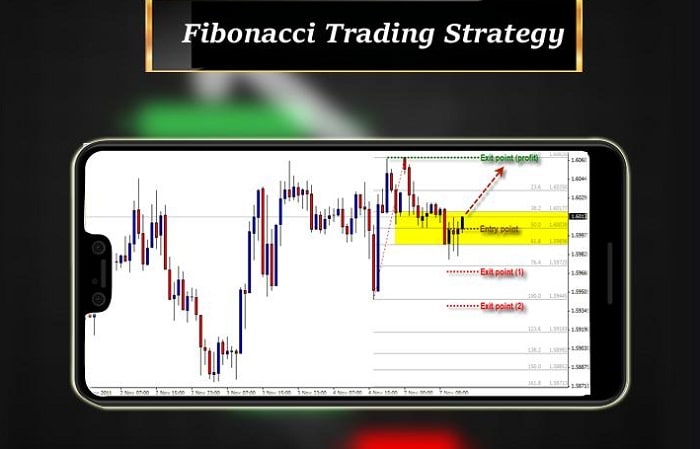
The objective of using the Fibonacci sequence/ratios in share trading is to help traders understand where the resistance and support levels lie for a chosen trading pair. This information can then help them decide whether they should open a buy or sell deal, and when to enter or exit.

What Is A Share Or Forex Retracement?

In the world of stock and forex trading, retracements refer to a temporary reversal in trends. If the market is currently on a high trend, the retracement could entail a temporary low swing and a subsequent return to the high trend after a short period of time. And vice versa.

What Are Fibonacci Retracements And How Do They Work?

The Fibonacci numbers enable traders to speculate on when the next “High” or “Low” swing may occur in the trading market. In particular, the Fibonacci ratios tell traders when the market could reverse its current trend/position, in regards to the retracement. The technique of using the Fibonacci numbers and ratios to forecast potential prices and retracements in the financial market is called Fibonacci retracements.

When using Fibonacci retracements, traders look to check if the trading pair is at the 50% level. This indicates that the trend is currently stable and unchanging. While 50% is not a Fibonacci ratio, it is used by traders for ease of understanding.

Now, if the trading level goes below 50% and reaches the 38.2% or 23.6% mark, it means the reversal of the trend has begun in earnest. Traders monitor the trading pair to check at what point the levels revert back to 50%. When the trading level crosses 50% and moves towards 61.8% or 76.4%, it indicates how strongly the trend is moving back to its original position.

CFD Trading And Fibonacci Retracements

CFDs refer to Contracts for Difference. In CFD trading, traders don’t take ownership of the actual underlying asset. Instead, they pay the difference in asset value based on its opening value and closing value during trading.

CFD trading works on price speculation. This is where Fibonacci retracements can help. By using the Fibonacci ratios, you can study how your chosen trading pair is currently performing. You can use this information to decide whether to buy more shares or forex CFDs or to sell what you currently hold, with the goal of making a potential profit.

Common Fibonacci Retracement Mistakes To Avoid

Now that we know how Fibonacci retracements work in CFD trading, let’s look at some of the common Fibonacci retracement mistakes that traders make and which you could avoid:

· Don’t mix and match your reference points – If you are using the lowest price point as your reference, always analyze your trading pair with the Fibonacci retracement using the lowest price point.

· Keep track of the long-term trend – While Fibonacci retracements are a short-term trading forecast strategy, you could supplement your decision-making by keeping track of the long-term trend. This is mainly because very short time frames can skew your results. By keeping track of long-term trends, you may be better prepared to take advantage of your Fibonacci retracements.

· Using only the Fibonacci retracement strategy for trading – Just as with other trading strategies, Fibonacci retracement is only an indicator. Relying on it as the sole indicator can become problematic since it shows you only one side of the picture. Combine Fibonacci retracement with other strategies you prefer so you get a holistic perspective of your trend.

Tips For Using Fibonacci Retracements When CFD Trading

· Use the Fibonacci retracement to understand the levels of support and resistance you face when trading in CFDs.

· Use the Fibonacci retracement to identify when to enter the market and when to exit it.

· Use the Fibonacci retracement to understand when to short or long your CFD deals.

· Use the Fibonacci retracement to pick up on trend changes and prepare for any possible scenarios.

Wrapping Up Top Trading Tips

Fibonacci retracement strategy can be a helpful technique to use when CFD trading. Try it today and see how it can help supplement your own trading strategy for improved investing ROI.

Filed Under: Advice, Featured, Info, News, ROI, Stock Trading Q & A, Stocks, Tips

  • 1
  • 2
  • 3
  • …
  • 39
  • Next Page »

Recent Posts

  • 5 Types Of Industrial Manufacturing Stocks To Buy

    5 Types Of Industrial Manufacturing Stocks To Buy

    There are plenty of profitable industrial manufacturing stocks to buy now for your investment portfolio. The manufacturing sector is made up of businesses that produce equipment, machinery, some robotics, and consumer goods. Many of the largest industrial companies are closely intertwined with the nation’s economy. …
  • 5 Interesting International Stocks And ADRs To Buy

    5 Interesting International Stocks And ADRs To Buy

    Whether you are looking to create new avenues to seize opportunities or simply wish to diversify your portfolio, international stocks can be a great component of your general investment portfolio. That is why more and more investors now allocate a percentage of their portfolio to …
  • 6 Options Trading Strategies That Traders Needs To Know

    6 Options Trading Strategies That Traders Needs To Know

    Generally speaking, the basics of trading stocks are fairly straightforward. To the greatest extent possible, the goal is to buy stocks that will increase in value and to sell stocks before they are about to decrease in value. However, even once you are able to …
  • Interview On ETF Investing With Paul Green

    Interview On ETF Investing With Paul Green

    Paul Green is a dividend and ETF investor who believes in free markets. Follow him on X. How Did You Get Started With Investing? By the end of 2020, after the way the COVID-19 pandemic impacted my used car dealership, I decided to begin phasing …
  • Interview With ETF Expert Finfluencer Ari Gutman

    Interview With ETF Expert Finfluencer Ari Gutman

    Ari Gutman is a VP at Defiance Investments, retail investor, dividend stocks expert, and finfluencer YouTuber. How Did you get started investing Ari? I have always been fascinated by money—particularly not only how to earn it, but more importantly, how to make it work for …
  • Exclusive Interview With Retail Investor Finfluencer Dan Cash

    Exclusive Interview With Retail Investor Finfluencer Dan Cash

    Follow Famous Finfluencer Dan Cash on X How did you get started with investing Dan? Investing really started as a means just get ahead. TD bank had a Christmas Savings account which wasn’t advertised. Any time I got a tip at work, I would throw …
  • 3 Top Investment Strategies For Beginners

    3 Top Investment Strategies For Beginners

    One of the top ways to ease any fears you have about your future is by incorporating calculated investing into your approach. You want to focus more on wise investment decisions in a world filled with uncertainty and inflation. Even if you find yourself in …
  • Differences Between Stock Traders And Investors

    Differences Between Stock Traders And Investors

    Perhaps one of the most misunderstood yet basic truths about the stock market is the difference between stock market traders and experts in the investing space. The two investing strategies are entirely different, based on different personalities, analytics, goals, and tactics. However, many would-be investors …
  • 3 Considerable Forex Market Analysis Tips

    3 Considerable Forex Market Analysis Tips

    Forex market analysis is mandatory for uplifting the performance to get good consequences. Here, without proper analysis, the trader will not do the buying-selling process properly. Sometimes, beginner forex traders do not do any sort of analysis and starts trading. For this reason, a new …
  • 7 FAQs About Copy Trading On MT4

    7 FAQs About Copy Trading On MT4

    The tumultuous years after the recent global events saw a myriad of forex traders venture into copy trading. The more exciting part is that even expert foreign exchange currency (FX) traders are rethinking their stance on copy trading. Initially, a chunk of traders was against …
  • Why Side Hustle Are Smart Investments to Earn Extra Cash

    Why Side Hustle Are Smart Investments to Earn Extra Cash

    Every day I’m hustlin! With the current state of things, it is becoming increasingly easy to get yourself a side hustle (or even a few of them) and boost your personal finances. In this day and age, not having a side income has become almost …
  • Is This The End Of The Crypto Era For Indian Users?

    Is This The End Of The Crypto Era For Indian Users?

    Cryptocurrency and crypto trading platforms have currently created a major hype in the global financial market with their insane returns in price rates. Among them, Bitcoin is currently leading with a market cap of $1.19 Trillion USD. It is easy to exchange in almost all …
  • Basic Technical Analysis For Retail Traders – Important Terms To Understand

    Basic Technical Analysis For Retail Traders – Important Terms To Understand

    Especially for short-term trading, technical analysis remains the main pillar for efficient decision-making. Although stock markets began the second half with mixed technicals, that did not prevent new gains from showing up. Still, new traders in the market are joining the industry and they need …
  • 2 Years Of Startup IPOs Have Focused On Technology

    2 Years Of Startup IPOs Have Focused On Technology

    During the past 2 years, the world has changed significantly due to the health crisis along with political and economic fallout. And that is not to mention the Russia and Ukraine conflict or bank collapses. The lockdowns that followed the spread of the pandemic initially …
  • 5 Watercraft Technologies Manufacturers Are Investing In

    5 Watercraft Technologies Manufacturers Are Investing In

    There are several modern watercraft technology trends beginning to make waves this year. Innovations in tech continue to revolutionize the recreational sailing and boating industry as we know it. In the new economy, breakthrough technologies are expected to make the Seven Seas safer, more enjoyable, …
  • Reasons To Consider Investing In The Design Industry

    Reasons To Consider Investing In The Design Industry

    The CEO of IBM once said that good design is good business. However, until recently the task of measuring what is a good design and to what extent it influences a business was a difficult job. There was no tool with quantitative values to determine …
  • How To Start As A Forex Trader Online

    How To Start As A Forex Trader Online

    With the technologies taking our existence by surprise, it’s no question that the majority of businesses took their market online, including both forex and stock market. Although some people still sense hesitant to take care of opportunities online, with considerations about security, even more investors …
  • How To Avoid Financial Scams And Investment Fraud Schemes

    How To Avoid Financial Scams And Investment Fraud Schemes

    Financial scams, pyramid schemes, and investing fraud scammers are everywhere. I was browsing the Top Direct Selling Companies in the World Poll and was shocked to see a company listed in the top 3 that immediately caught my eye. The top 10 MLM companies in …
  • Webull: The Best Free Investing App For Stocks

    Webull: The Best Free Investing App For Stocks

    There are many investing applications out there today, but no mobile app as good as Webull. This highly-rated mobile application allows you to invest smart and trade free to maximize your stock ROI. You can open a stock trading account quickly, gain valuable real time …
  • How To Invest In A Web Development Company For Your SMB

    How To Invest In A Web Development Company For Your SMB

    How to choose a website development company for small businesses If you are a small business, a strong presence online is crucial in almost every niche. Since (most likely) you will be working with a limited budget, a simple, but well made website may help …
  • Why You Should Invest In The Online Mattress Industry

    Why You Should Invest In The Online Mattress Industry

    The mattress industry is booming, but maybe not where you would expect. Most people have had the uncomfortable experience of walking into a mattress store. Your generally met by a salesperson who leads you from one mattress that “you must” lay down on while spouting …
  • Is Bitcoin A Safe Investment?

    Is Bitcoin A Safe Investment?

    The latest volatility in bitcoin and other crypto currencies has created many buyers cautious, along with the ongoing hacking of markets where individuals are buying and selling digital currency. The absence of safety has created worries about the danger of having these simulated currencies as …
  • How Do Cash Loans Work And Are They Smart Investments?

    How Do Cash Loans Work And Are They Smart Investments?

    Life happens and unfortunately, it can be pretty darn expensive when it does. Three-quarters of American families live paycheck to paycheck which makes emergency and unexpected expenses nearly impossible to cover. Major expenses don’t always wait for payday to happen and that can leave you in …
  • Legal And Financial Issues When Running Online Businesses

    Legal And Financial Issues When Running Online Businesses

    As running an online business is a comparatively new phenomenon and there are various businesses that don’t really understand the law. An e-commerce business refers to the vast variety of online activities regarding product and services. It involves business transactions amongst parties electronically, unlike traditional …

Stock Market Opens © 2026 by Bootstrap Business | Dividend Vision | Everything Entrepreneur | Frugal Finance | Lean Startup Life | Not Financial Advice. DYOR